6-8:10:AI Hearing & Voice – Machines That Listen and Talk
Course Prerequisite(s)
- Please note that this course has the following prerequisites which must be completed before it can be accessed
-
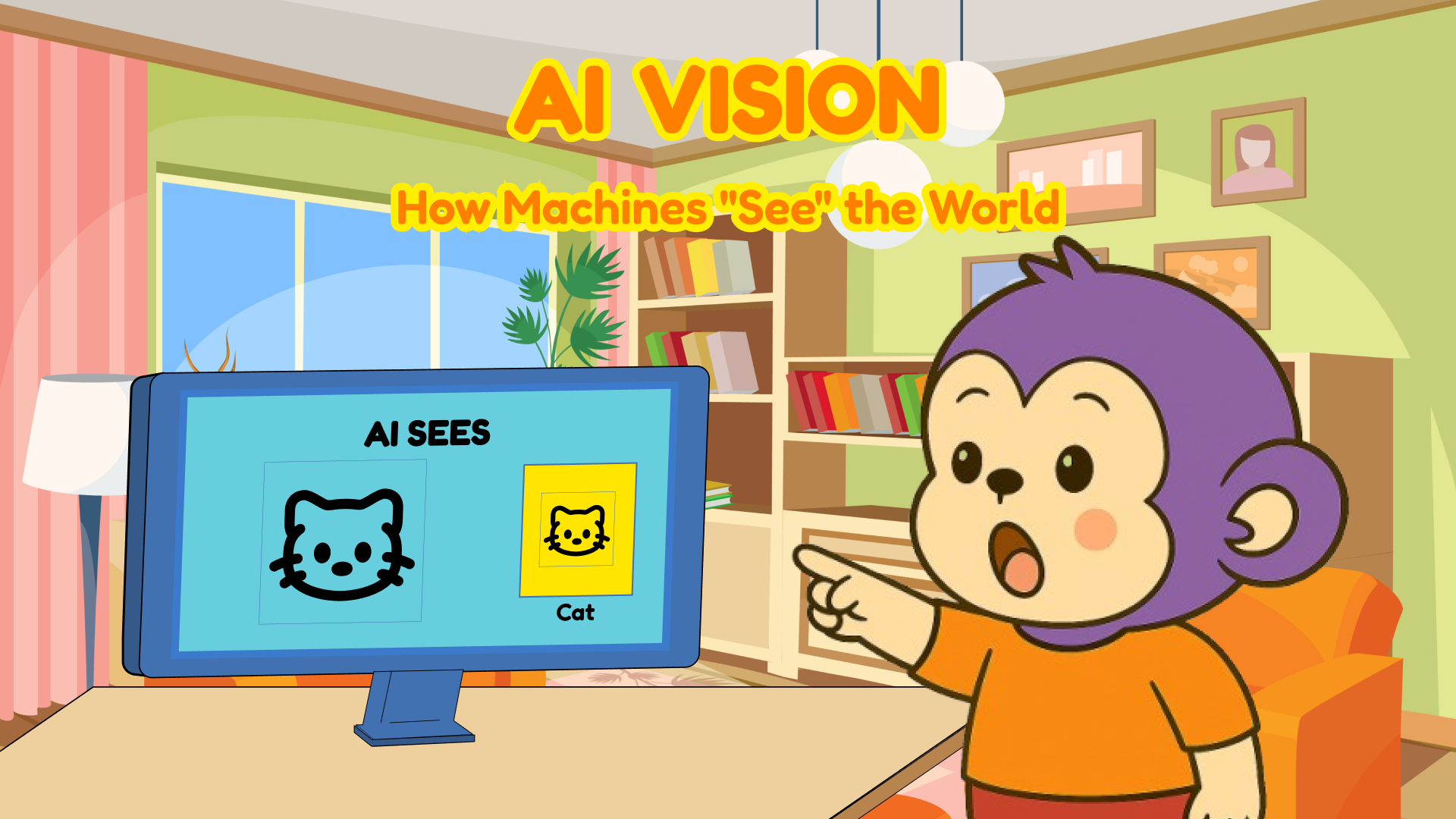 6-8:09:AI Vision – How Machines “See” the World
About Course
AI can hear you – but how? Students trace a voice from sound waves to words to a spoken reply, meet real voice helpers, and ask whether an AI voice can express emotion.
Students already argue with voice assistants; this lesson explains why the assistant mishears and how synthesised voices are made. The emotion-or-expression question links back to Module 1’s human-versus-AI discussion.
What students do
• Introduction: AI Can Hear You – a speech-to-text demo (voice typing, phone dictation)
• How AI Talks Back: text-to-speech in different voices and tones
• Real-Life AI Voice Helpers: Siri, Alexa, translation apps, automated customer service – and an AI Translator activity
• Bonus Exploration: Emotion or Expression?, then a Journal Reflection: “How has AI hearing and voice changed how people use technology?”
By the end, students can
• Speech recognition and speech synthesis
• Why accents and noise cause errors
• Expression versus feeling
Learning focus (Fink’s Taxonomy of Significant Learning): Foundational Knowledge · Application.
Video lesson with journal reflection. Part of Grades 6–8: AI Agents in Action, Module 3 – AI Senses the World – Vision, Voice & Movement, Week 2. Next lesson: AI Movement & Sensing – How Machines Interact with the Physical World.
Course Content
Part 1 – Introduction: AI Can Hear You
-
Video
01:10