AI vs Humans: 7 Powerful Differences That Reveal the Real Winner
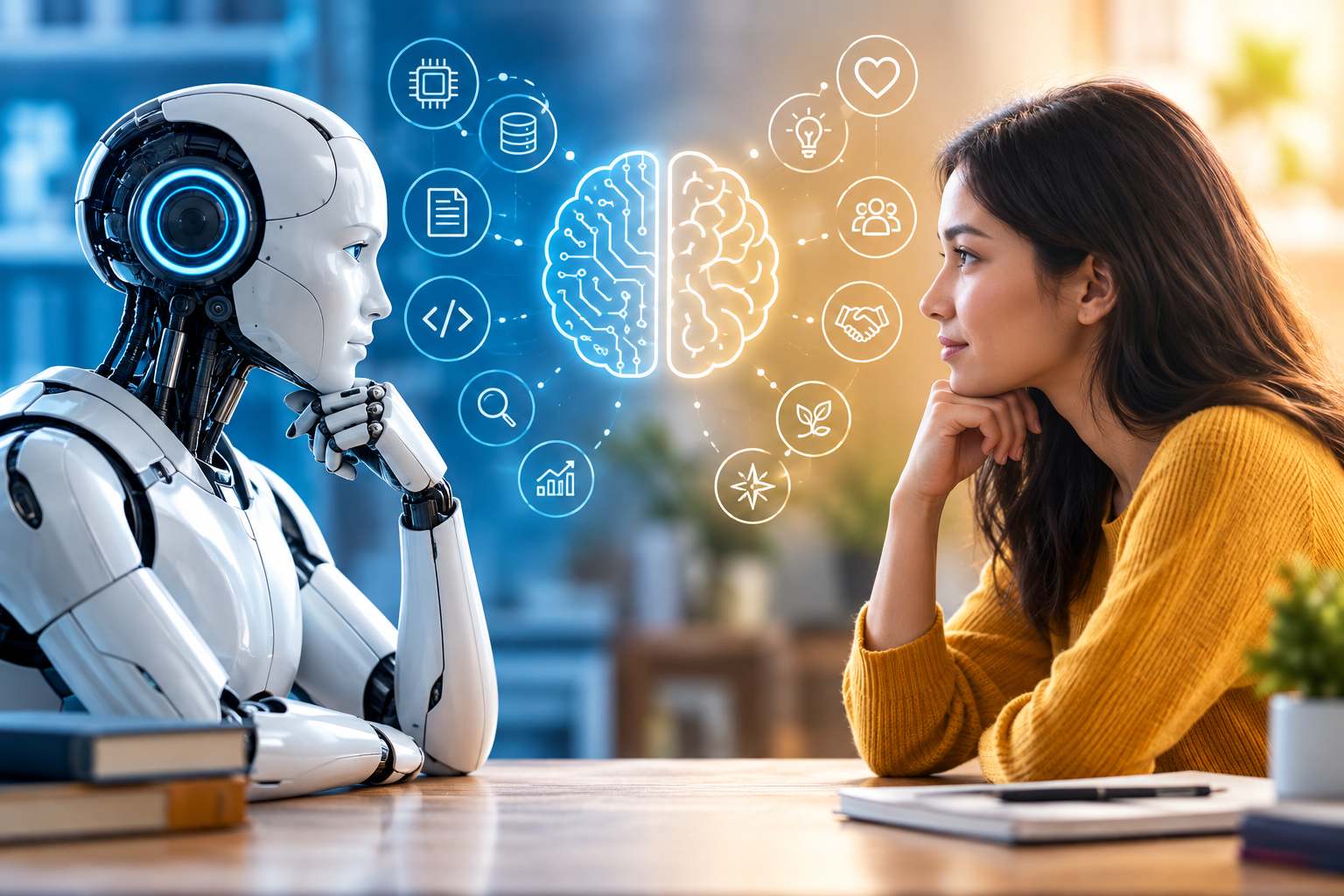
AI vs Humans is one of the biggest technology discussions of today. Artificial intelligence can write articles, create images, analyze information, translate languages, generate computer code, and answer questions within seconds. With these rapidly developing capabilities, it is natural to wonder whether AI could eventually replace humans.
However, the AI vs Humans comparison is not simply about which one is more intelligent. AI and humans have very different strengths. AI can process enormous amounts of information quickly, while humans bring emotions, personal experiences, creativity, empathy, ethical judgment, and an understanding of real-world situations.
Understanding the difference between AI vs Humans is especially important for students, teachers, professionals, and anyone using AI tools in everyday life.
What Is Artificial Intelligence?
Artificial intelligence is technology that allows computers and software to perform tasks that normally require aspects of human intelligence.
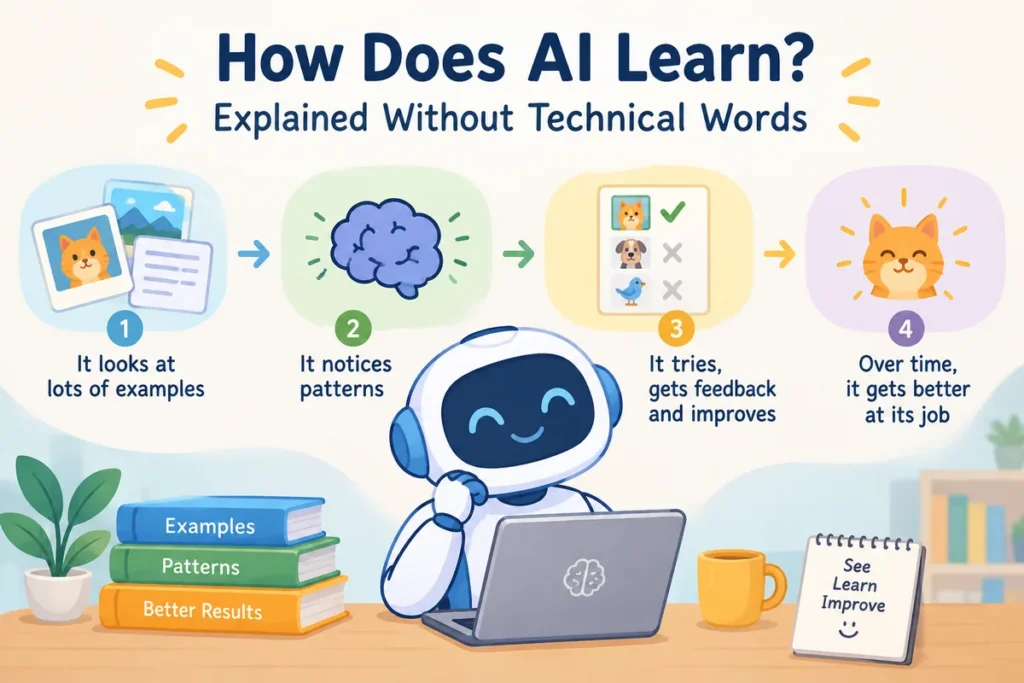
Modern AI systems can recognize patterns, process language, analyze information, generate content, and make predictions based on data.
AI can be used for:
- Answering questions
- Writing and editing content
- Creating images
- Translating languages
- Analyzing data
- Generating computer code
- Summarizing documents
- Recognizing speech and images
- Automating repetitive tasks
- Providing recommendations
Generative AI has made these capabilities much more accessible to ordinary users. Tools powered by generative AI can produce text, images, audio, code, and other content from natural-language instructions.
However, being able to produce an impressive answer does not mean that AI understands the world in exactly the same way a human does.
AI vs Humans: The Biggest Difference
The biggest difference in AI vs Humans is the way information and experience are handled.
AI systems operate using algorithms, models, data, instructions, and patterns learned during training. Humans learn through education, physical experiences, relationships, emotions, observation, culture, and years of interacting with the world.
For example, AI can generate a message expressing sympathy when someone loses a loved one. The message may sound compassionate, but the AI does not experience grief in the same human sense.
A person who has experienced loss can understand that situation through personal experience and emotional connection.
This distinction becomes particularly important when decisions involve relationships, emotions, ethics, or complicated real-world circumstances.
AI vs Humans: What Can AI Do?
AI has several capabilities that make it extremely useful.
1. AI Can Process Huge Amounts of Information
One of AI’s greatest strengths is speed.
A person may take hours to read, organize, and compare hundreds of documents. AI can help summarize and categorize large amounts of information much more quickly.
AI can assist with:
- Document summarization
- Data organization
- Information extraction
- Pattern identification
- Text comparison
- Research assistance
This makes AI particularly useful in education, business, research, and many other fields.
However, faster processing does not automatically mean better judgment. Information still needs to be checked and interpreted by people.
2. AI Can Automate Repetitive Work
AI can perform many repetitive tasks without becoming bored or physically tired.
Examples include:
- Sorting information
- Answering common questions
- Transcribing audio
- Generating routine reports
- Organizing data
- Detecting patterns
- Automating customer-service responses
Automation can save people significant amounts of time.
Instead of spending hours completing repetitive work, employees can use that time for communication, decision-making, problem-solving, and creative tasks.
3. AI Can Generate Content
Generative AI can produce many types of content.
It can help create:
- Blog posts
- Emails
- Presentations
- Images
- Computer code
- Summaries
- Lesson ideas
- Marketing content
- Brainstorming suggestions
However, AI-generated content should not automatically be considered accurate.
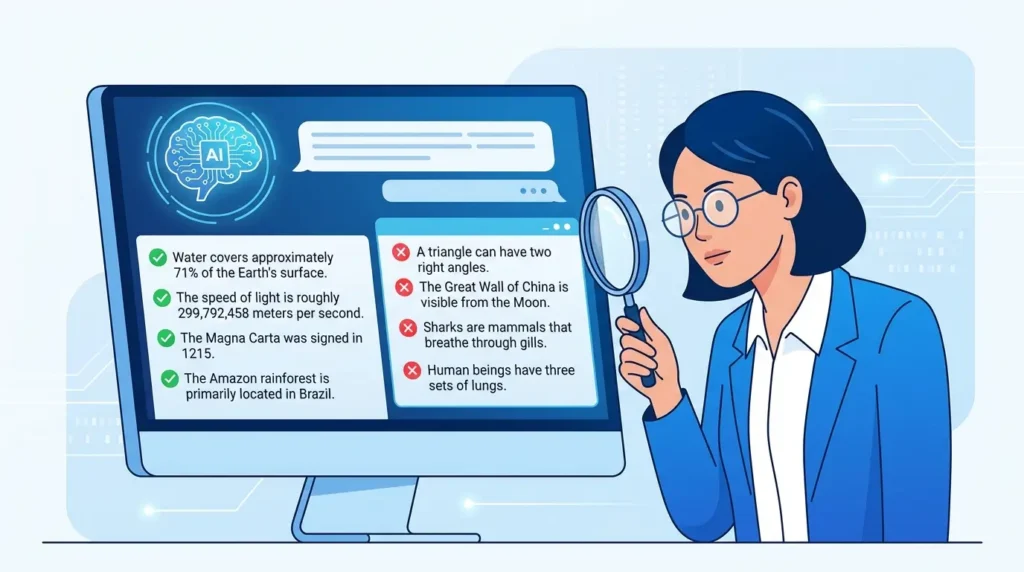
AI can sometimes produce information that sounds convincing but is incorrect. This is one of the most important limitations to remember when discussing AI vs Humans.
UNESCO has highlighted concerns about inaccurate or unvalidated AI-generated content and the importance of responsible, human-centered use of generative AI. UNESCO Guidance for Generative AI in Education and Research
4. AI Can Recognize Patterns
AI is particularly effective at identifying patterns in large datasets.
For example, AI can help identify:
- Trends in customer behavior
- Unusual transactions
- Objects in photographs
- Speech patterns
- Patterns in scientific data
- Potentially suspicious activities
Humans can also recognize patterns, but computers can analyze extremely large datasets at a speed that would be difficult for an individual person.
5. AI Can Personalize Experiences
AI can analyze information and provide personalized recommendations.
People encounter AI-powered recommendations when using:
- Streaming services
- Online shopping platforms
- Search engines
- Social media
- Learning platforms
- Navigation applications
In education, AI can potentially help personalize learning activities based on a student’s needs and progress.
However, personalization should not eliminate human involvement. Teachers still need to understand students and determine whether AI-generated recommendations are actually appropriate.
AI vs Humans: What Can’t AI Do Like Humans?
AI can perform many impressive tasks, but there are important things it cannot do in the same way humans do.
1. AI Does Not Experience Human Emotions
Humans experience emotions such as happiness, sadness, fear, love, excitement, frustration, and empathy.
AI can recognize emotional language and produce responses that appear empathetic. However, generating an empathetic response is different from personally experiencing the emotion.
For example, an AI system can write a comforting message to someone who is grieving, but it does not personally feel the sadness associated with losing someone.
Human emotional experience remains a major difference in AI vs Humans.
2. AI Does Not Have Human Life Experience
People develop knowledge through years of living in the real world.
A teacher may recognize that a student is struggling because of subtle changes in behavior. A parent may know that something is wrong with their child simply because they understand the child’s normal behavior.
AI can analyze information about human behavior, but it does not possess a human childhood, family history, friendships, physical experiences, or personal memories in the same sense.
This makes lived experience an important human advantage.
3. AI Can Make Mistakes
AI is not automatically correct.
An AI system may:
- Misunderstand a question
- Produce incorrect facts
- Make unsupported assumptions
- Give outdated information
- Generate fabricated references
- Present an uncertain answer with confidence
This is why people should verify important AI-generated information.
For students and teachers, this is particularly important. AI should be treated as an assistant rather than an unquestionable authority.
AI vs Humans: Creativity and Original Thinking
Creativity is another important part of the AI vs Humans discussion.
AI can generate stories, images, music, designs, ideas, and other creative outputs. It can combine patterns and concepts in ways that may appear highly original.
But human creativity involves more than producing something new.
Humans create based on:
- Personal experiences
- Emotions
- Memories
- Culture
- Goals
- Beliefs
- Relationships
- Imagination
- Personal meaning
For example, a person might write a song about an important experience from their childhood. The emotional meaning behind that creation comes from lived experience.
AI can assist with the creative process, but humans can provide the purpose, meaning, direction, and personal connection behind the work.
AI vs Humans: Understanding Context
Humans are constantly interpreting context.
The meaning of a statement can depend on:
- Tone
- Culture
- Location
- Relationship
- Previous conversations
- Social expectations
- Body language
- Personal history
AI can analyze contextual information, but complex real-world situations can still be difficult.
Consider a joke between two close friends. The same words might appear offensive when removed from the relationship and situation.
A human who understands the people involved may immediately understand the intended meaning.
This is why contextual understanding remains an important part of AI vs Humans.
AI vs Humans: Ethics and Decision-Making
Some decisions cannot be solved simply by processing more information.
Consider questions such as:
- What is fair?
- What is morally right?
- Should someone be forgiven?
- Who should be held responsible?
- Should a particular technology be used?
- What decision is best for a specific person?
AI can provide information and possible perspectives, but humans must remain responsible for important ethical decisions.
UNESCO’s AI competency framework emphasizes human agency, ethics, critical thinking, and responsible use of AI. UNESCO AI Competency Framework
The principle is simple: AI can support decision-making, but people should not blindly surrender responsibility to an AI system.
AI vs Humans in Education
Education is one of the areas where the AI vs Humans discussion is particularly important.
AI can help teachers and students with:
- Brainstorming
- Research
- Lesson planning
- Summarizing
- Language assistance
- Creating examples
- Generating practice questions
- Developing educational materials
However, teachers do much more than deliver information.
A teacher can motivate a student, notice emotional changes, understand classroom behavior, build relationships, encourage confidence, and adapt teaching based on individual circumstances.
Teachers who want to use technology effectively can also develop their broader digital skills for teachers.
For more information, see the guide on digital skills for teachers.
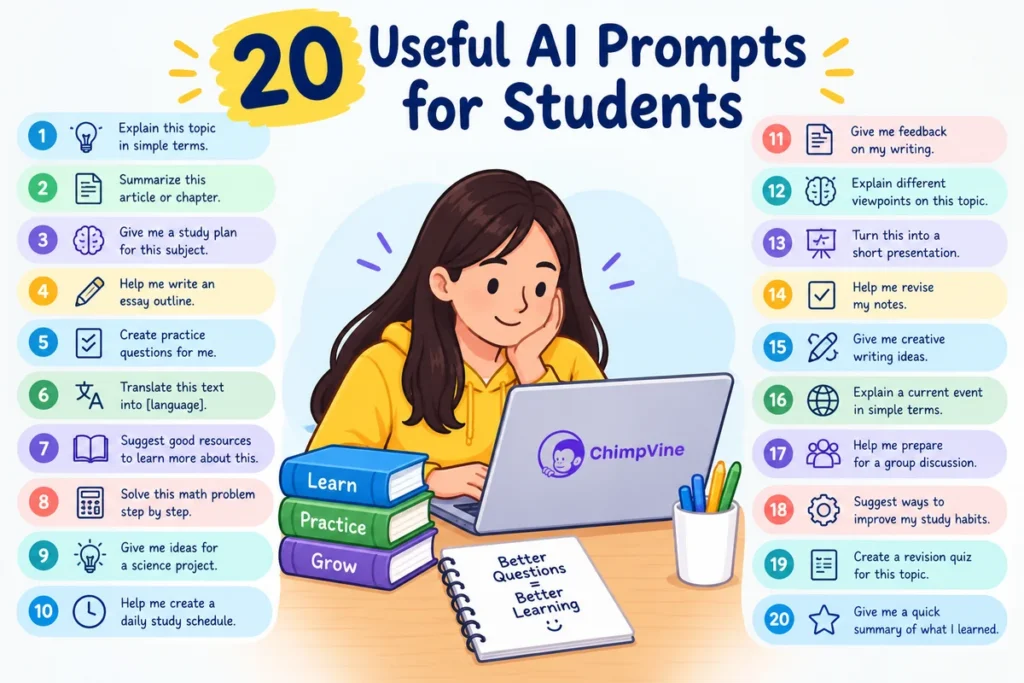
Students and teachers should also understand how AI works, its limitations, and how to use it responsibly. Developing AI literacy can help people evaluate AI-generated information instead of accepting every response automatically.
Learn more in the guide to AI literacy for teachers and students.
AI vs Humans: A Simple Comparison
| Ability | AI | Humans |
|---|---|---|
| Processing large datasets | Excellent | Limited by time |
| Repetitive tasks | Excellent | Can become tiring |
| Processing speed | Very fast | Generally slower |
| Pattern recognition | Very strong in many structured tasks | Strong with context |
| Emotional experience | Does not experience emotions like humans | Experiences emotions |
| Empathy | Can simulate empathetic responses | Can experience human empathy |
| Personal experience | No human life experience | Has lived experience |
| Creativity | Can generate combinations and ideas | Creates with personal meaning and intention |
| Ethical responsibility | Requires human oversight | Humans remain responsible |
| Contextual understanding | Can have limitations | Generally strong |
| Continuous operation | Can operate continuously | Needs rest |
| Complex judgment | Limited in some situations | Strong in human contexts |
The AI vs Humans comparison shows that neither side is simply better at everything.
AI has advantages in speed, scale, automation, and information processing. Humans have advantages in emotional understanding, lived experience, judgment, relationships, and responsibility.
How Humans Can Work With AI
Instead of viewing AI and humans as competitors, it is often more useful to think of them as collaborators.
A simple workflow could look like this:
Human identifies the problem → AI assists → Human checks the result → Human makes the final decision
For example, a teacher might ask AI to generate five classroom activities. The teacher then reviews those activities, removes inappropriate suggestions, adapts them to the students, and chooses the most useful activity.
This approach combines the strengths of both sides.
AI provides speed and assistance.
Humans provide judgment and responsibility.
Digital tools can also improve everyday productivity. For example, understanding the differences between common tools such as Google Drive, Docs, and Sheets can help users build a stronger overall digital workflow. See this comparison of Google Drive vs Docs vs Sheets.
Will AI Replace Humans?
The question “Will AI replace humans?” does not have a simple answer.
AI will likely automate some tasks and significantly change many jobs. However, a job usually consists of many different activities.
AI may perform some activities while humans continue to handle communication, judgment, leadership, creativity, relationships, and responsibility.
For example, AI could help a writer create a first draft. The writer can then check facts, add personal experience, improve the argument, understand the audience, and make the final decisions.
In this situation, AI is changing the workflow rather than simply replacing the person.
Therefore, the more useful question is:
Which tasks should AI perform, and which tasks should remain under human control?
7 Powerful Lessons From AI vs Humans
The AI vs Humans discussion provides several important lessons:
1. AI Is Extremely Fast
AI can process and generate information much faster than humans in many tasks.
2. AI Is Not Always Correct
AI-generated information needs verification, particularly when the consequences of mistakes are significant.
3. Humans Provide Context
People understand relationships, personal circumstances, culture, and real-world situations in ways AI may not fully capture.
4. Humans Have Emotional Experiences
AI can simulate emotional language, but human emotions and relationships are fundamentally different from generated responses.
5. AI Can Increase Productivity
When used appropriately, AI can reduce repetitive work and give people more time for higher-value activities.
6. Human Judgment Still Matters
Important decisions should not be delegated blindly to AI.
7. Collaboration May Be More Powerful Than Competition
The future does not have to be about AI replacing humans. It can be about humans using AI to accomplish more.
How to Use AI Responsibly
Understanding AI vs Humans also means understanding responsible AI use.
A few simple practices can make AI use safer and more effective:
- Verify important information.
- Avoid sharing sensitive personal information unnecessarily.
- Do not blindly copy AI-generated content.
- Review AI-generated work before publishing or submitting it.
- Use AI to support learning rather than avoid learning.
- Keep humans responsible for important decisions.
- Consider potential bias in AI-generated results.
- Use reliable sources to verify important claims.
Responsible use is particularly important in education, where students need to develop their own understanding rather than simply depend on AI-generated answers.
Final Thoughts on AI vs Humans
The AI vs Humans debate should not be viewed as a competition where one side must win.
AI is remarkably powerful. It can process information, recognize patterns, automate repetitive tasks, generate content, and assist people with countless activities.
But AI also has limitations. It can make mistakes, lack human life experience, struggle with complicated context, and cannot replace human emotions, relationships, ethical responsibility, or personal judgment.
Humans have weaknesses too. People can become tired, make mistakes, process information slowly, and struggle with large amounts of data.
That is why the most promising approach may not be AI vs Humans, but AI and humans working together.
The goal should be to use AI where it provides genuine value while keeping humans involved where judgment, creativity, empathy, ethics, and responsibility matter most.
The future is not necessarily about choosing between humans and artificial intelligence.
It is about learning how to use AI wisely without losing the qualities that make us human.